The Los Altos Teardown Math Most Sellers Get Backwards
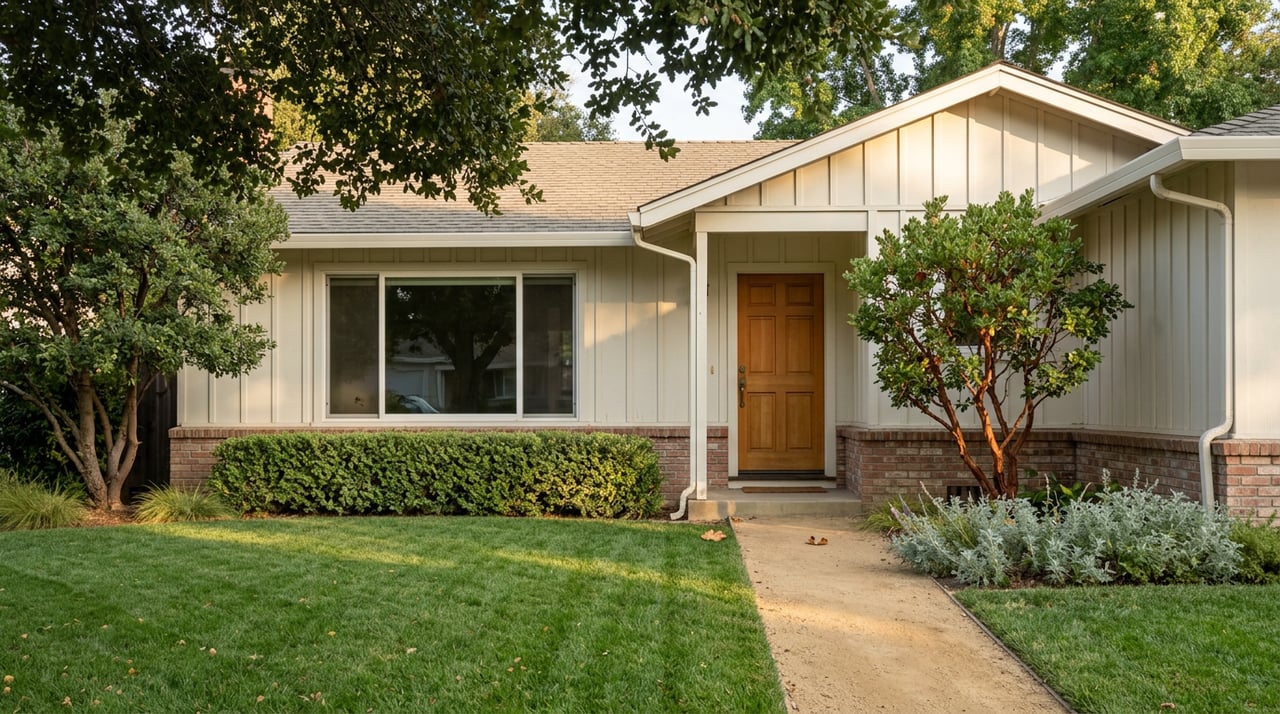
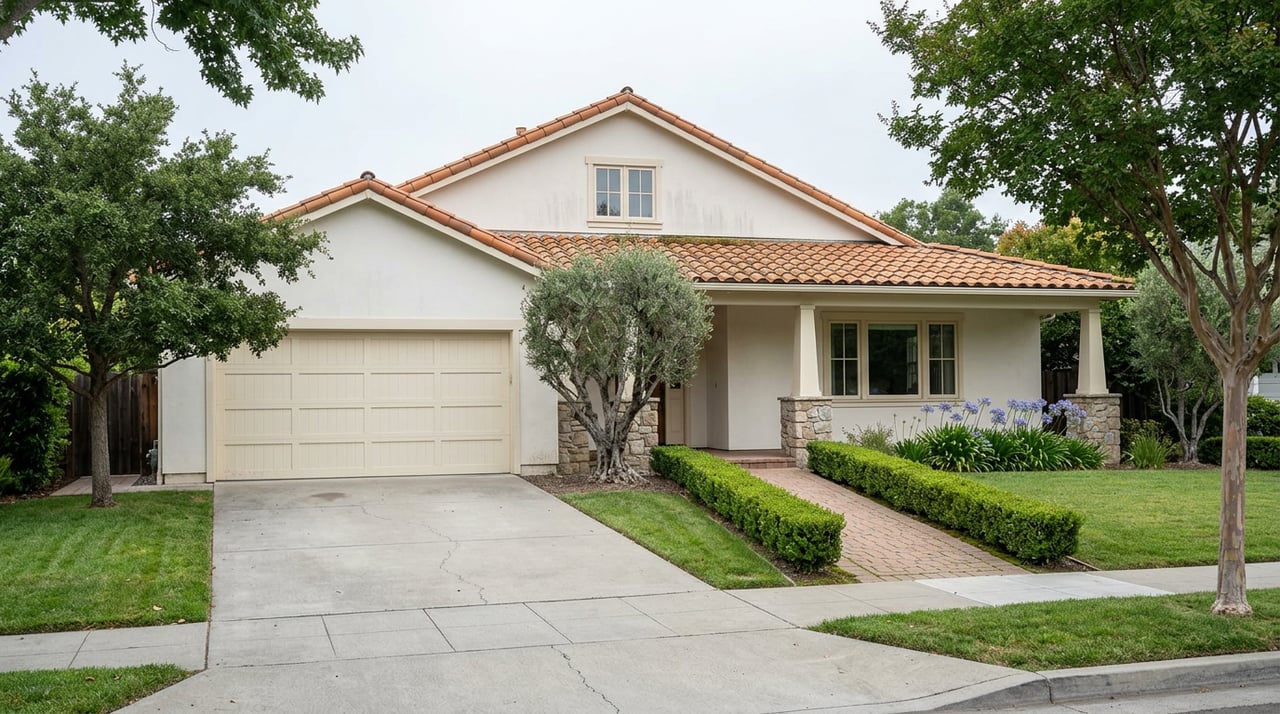
Two ranch homes sit within a few blocks of each other in South Los Altos. Same era, close in square footage, similar lot size. One draws a builder's offer well above the house's own value before the review date even closes. The other gets a cautious, discounted cash offer from an investor, or ends up marketed as a straightforward remodel instead. The owners usually assume the gap comes down to condition, or curb appeal, or whichever contractor did the last kitchen update. It rarely does. The gap almost always comes down to whether the lot can move through the city's ministerial approval pathway or whether it needs a discretionary hearing first.
That distinction, not square footage, not the age of the roof, is the single biggest lever on what a builder will actually pay for a Los Altos property they intend to demolish.
Appraisers lean on replacement cost minus depreciation. Builders don't buy that way, and in a market as design-sensitive as Los Altos, they can't afford to. What a builder pays for your lot is a bet on how fast and how cheaply they can get from close of escrow to a certificate of occupancy, and the biggest variable in that bet is entitlement risk. A path that qualifies for the state's SB9 ministerial review, meaning city staff must approve it against fixed, objective standards without a public hearing, removes months of uncertainty a builder would otherwise have to price into their offer. A path that requires a variance or a design review hearing adds that uncertainty right back in, and the offer reflects it.
Buildable area compounds the effect. Zoning setbacks, floor area ratio limits, daylight planes, and protected tree root zones define the real envelope a builder can work inside, and many Los Altos R1 variants cap square footage directly regardless of how generous the paper lot looks. Two parcels that measure identically on a title report can carry very different buildable footprints once those constraints are applied, and a builder's opening number usually tells you which one they think they've found.
Los Altos received its first wave of SB9 applications not long after the law took effect, and city planning staff told the planning commission in 2024 that most of those early applications were for building single-family homes, not splitting lots. The reason wasn't a rush toward density. Staff noted applicants were using SB9's ministerial process specifically to sidestep the discretionary design review that was still in effect at the time. Once the city's design review commission was pulled back under state housing element rules, later applications shifted more toward lot splits, because the ministerial path for a split had become the more reliable route through the system.
That history matters for a seller today because it confirms the mechanism rather than just describing it. Los Altos is currently working under a state mandate requiring the city to plan for 1,958 new housing units by 2031, and that mandate is the reason the ministerial pathway exists at all. It's also why some ranch lots are worth meaningfully more to a builder than others that look identical from the street.
The pathway itself has also proven durable. A 2024 ruling exempted five Southern California charter cities from SB9's ministerial requirements, and a state appellate court reversed that ruling in November 2025. As of today, the law applies statewide, including general-law cities like Los Altos. Anyone assuming the ministerial process might quietly disappear before their transaction closes should know it just survived its most serious legal test.
Before a builder gets excited about SB9 potential, the city's own standards rule out a surprising number of lots. A parcel loses ministerial eligibility if any of the following apply.
| Condition | Why it matters |
|---|---|
| Listed as a historic resource, city landmark, or on the historic resource inventory | State law excludes demolition or structural change to a unit that meets this description |
| Housing subject to rent or price control, or an Ellis Act eviction within the prior 15 years | These parcels are disqualified regardless of current zoning |
| A lot already created through a prior SB9 split | State and city rules both prohibit stacking splits on the same original parcel |
| A hazardous waste site not cleared for residential use | Disqualifying under both state and local rules |
| Insufficient frontage, access, or lot geometry to fit two compliant units under the city's objective standards | Ministerial review still requires the parcel to physically work, even without a hearing |
None of this shows up on a listing sheet. It shows up in a title search and a zoning check, and it's exactly the diligence a buyer's builder runs before making an aggressive offer, which means it's exactly the diligence a seller benefits from running first.
Even on a clean, eligible lot, tearing down an older Los Altos home involves a sequence most sellers haven't thought through until they're mid-escrow. Heritage and protected trees require a Tree Removal Permit and typically an arborist report before anything else can move, and mitigation or in-lieu fees can apply depending on species and size. Demolition itself requires a separate permit from the building permit, so a builder can't simply pull one approval and start work. Utility disconnections need confirmation, a Bay Area Air Quality Management District asbestos notification number is required before demolition on most older structures, and sewer cap coordination has to happen before the site is considered closed out.
None of these steps are exotic. All of them take time, and time is exactly what a builder is pricing when they decide what your lot is worth relative to one that clears faster.
This entire calculation concentrates in one part of the city more than the other. South Los Altos, closer to Cupertino, holds most of the older, smaller ranch-style stock that makes economic sense as a teardown candidate in the first place. North Los Altos looks more like neighboring Palo Alto, with a housing stock and price point where land value alone often already justifies the number, and where a buyer is more often planning a renovation or a custom build from scratch than chasing SB9 mechanics for a lot split. Own an older ranch home in South Los Altos and the entitlement question is often the whole conversation. Own in North Los Altos and it's usually a smaller piece of a larger valuation.
The current market gives this question real urgency. In the three months ending May 2026, market-wide data show a median sale price of $4.2 million in Los Altos, down 13.8 percent from the same period a year earlier, even as the median time on market held at 10 days and the number of homes sold climbed to 103 in May, up from 82 the year before. By June 2026, months of supply sat at well under one month, and the share of homes selling above asking price had climbed past 70 percent, up from under half a year earlier, while the share of listings needing a price cut fell by more than half over the same period.
That kind of speed cuts both ways for a teardown owner. Builders have less patience for a lot that carries entitlement uncertainty, and more appetite to move fast on one that doesn't, because holding costs matter more when everything else in the transaction is happening quickly.
None of this is legal or tax advice, and it shouldn't substitute for confirming your specific parcel's eligibility with the city's planning staff or discussing tax and title consequences with your own advisors. What it should do is change the question you ask before you list. Not what the house down the street sold for, but whether your lot qualifies for ministerial review, and if it doesn't, what it would take to get there before a sign goes in the yard.
Does an SB9 lot split require me to keep living there? Only if you choose the split. State law requires the owner to sign an affidavit committing to live in one of the units for at least three years after the split is recorded. A two-unit development on a single lot, without splitting it, doesn't carry that same occupancy requirement.
Can I start the SB9 process myself and then sell before construction? Some owners pursue entitlement work before listing specifically to remove the uncertainty a builder would otherwise discount for. Whether that's worth the time and cost depends on your parcel's geometry, tree cover, and how close you are to your own move timeline. It's worth a direct conversation before you commit resources to it.
Does my house need to be old to qualify? Age isn't the test. Zoning, frontage, historic status, prior splits, and site conditions are what the city checks, per the SB9 information the city has published. Plenty of newer homes on the right kind of R1 lot could qualify, and plenty of older homes on constrained lots can't.
If you're weighing whether an older Los Altos property is worth more as a renovation, an as-is sale, or something closer to a ground-up rebuild, that's exactly the kind of decision Jerylann Mateo works through with sellers before a lot goes anywhere near a review date. Let's Connect and look at what your specific parcel actually supports.
Stay up to date on the latest real estate trends.
Jerylann’s clients enjoy her thoughtful attentiveness and appreciate her high touch and compassionate care. It is truly her joy to ultimately fulfill their request throughout the transaction and graciously serve them. Her immediate accessibility, answers to timely questions and tenacious resolve makes her invaluable. Delivering responsive, confident results with a personal touch are all part of the design that allows Jerylann to provide exceptional representation and outstanding personal service.