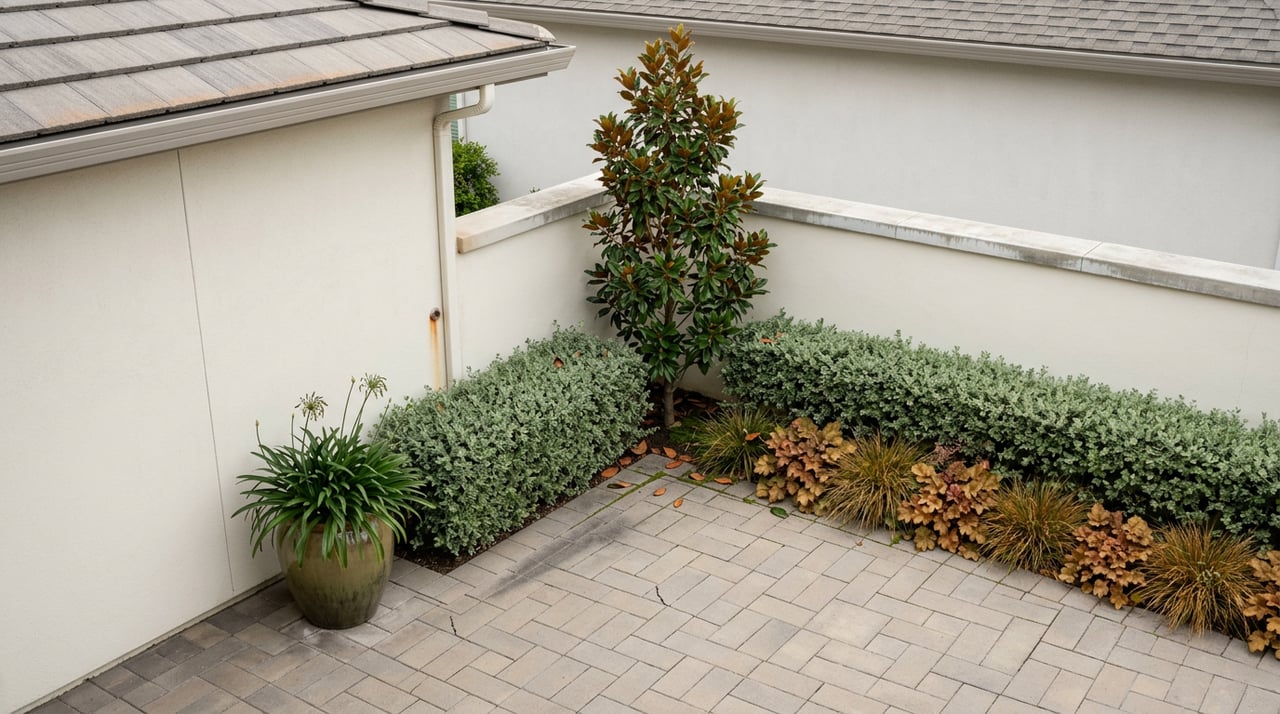
San Mateo Sewer Lateral Rules Sellers Should Know
What if the moment that triggers San Mateo's sewer lateral rule isn't your closing date at all, but the permit you pulled six weeks earlier to get the kitchen ready for photos?
Most sellers who've heard anything about San Mateo's Private Sewer Lateral Ordinance assume it works the way people describe sewer rules on the rest of the Peninsula: pass a test before you hand over the keys, and you're done. That's true as far as it goes. But the ordinance the City of San Mateo revised in December 2020 has four separate triggers, and only one of them has anything to do with selling a house. A seller who times a kitchen remodel or an accessory dwelling unit to widen the buyer pool before listing can find themselves inside the same inspection process as a sale, just weeks before the closing they were trying to protect.
San Mateo's rule, codified under Municipal Code Section 7.38.432, requires a private sewer lateral inspection when any of four things happen:
The first trigger is the one everyone Googles. The second is the one that catches sellers off guard, because it doesn't announce itself as a real estate rule. It's filed under the same building code chapter as any other remodel permit, and a $90,000 kitchen-and-primary-suite job in San Mateo isn't unusual pre-listing work. If a homeowner pulls that permit to make a house show better, the city treats the resulting inspection exactly the same way it would treat one triggered by a sale, down to the same pass or fail standard.
That standard is specific. A passing inspection requires no pipe defects graded a structural 5, no operational defects graded 4 or 5, and a combined defect score under 13. The plumber runs a color camera through the line, submits the video and report, and the city reviews it. If the lateral fails, repair or replacement has to happen before the permit can be finalized, whether that permit was for a remodel or was pulled because escrow opened.
Picture a seller who wants a kitchen refreshed before listing, budgets $95,000 for the scope with the contractor, and pulls the permit in early spring. The remodel crosses the $90,000 threshold, so the lateral inspection is required before that permit finalizes. If the camera finds root intrusion or a bellied section in a fifty-year-old clay pipe, the seller isn't just waiting on cabinet installation. They're now coordinating a plumbing repair, a second permit, and a re-inspection, on a timeline that has nothing to do with when photography was booked.
None of this shows up if a seller's only question is "does San Mateo require a sewer inspection to sell my house." The honest answer is yes, but the more useful question for anyone doing pre-listing work is whether the improvement itself, independent of the sale, is large enough to trip the same rule from a different direction.
Bay Area sewer camera inspections generally run $300 to $750 depending on lateral length and access. A full lateral replacement, the outcome for older clay or cast iron pipe that's failed structurally, tends to land between $8,000 and $18,000 depending on depth, length, and whether the work requires cutting into the street. A spot repair for a localized crack or root intrusion costs less than a full swap, but it's also the scenario the city's grant program won't touch, since the program only reimburses full replacements.
| Scope | Typical cost range |
|---|---|
| Camera inspection or test | $300 – $750 |
| Full lateral replacement | $8,000 – $18,000 |
The City of San Mateo does offer some relief here. Its Private Sewer Lateral Cost Sharing Program reopened for applications on July 1, 2026, after a period of being dormant for lack of funding. The current program reimburses 50 percent of the lowest bid on a full lateral replacement, up to a $2,500 maximum, on a first-come, first-served basis until the year's funds run out. Anyone who owns property inside San Mateo city limits is eligible regardless of income, but the fine print matters more than the headline number: the application and estimates have to be approved before any work starts, there's no retroactive reimbursement, and the program explicitly excludes spot repairs, partial replacements, pothole repairs, and CCTV inspection costs. If the camera scope turns up a fixable section rather than a full-line failure, the grant that just reopened won't touch it.
Not every trigger event requires a fresh inspection. The ordinance carves out two paths around it. If a lateral was inspected within the past five years and either needed no repairs or had its partial repairs completed, that prior inspection stands. If the lateral has been completely replaced within the past 25 years, documented by a city-issued plumbing permit, that also satisfies the requirement. For a seller who replaced a lateral during a 2015 remodel, or whose prior transaction included a full inspection with a clean result, this can mean the ordinance's four triggers are already accounted for. Pulling that old permit or inspection report before assuming a new test is needed can save both the $300 to $750 inspection fee and the calendar time.
It helps to know that San Mateo's approach isn't how the rest of the Peninsula handles this. Palo Alto, Mountain View, and Menlo Park don't require a sewer lateral inspection as part of a home sale at all, according to reporting from Palo Alto Online in March 2026, though property owners there are still on the hook for maintaining the lateral, and Mountain View and Menlo Park do tie inspections to permits for major work like an ADU. Burlingame goes further than San Mateo in one respect: its Sewer Lateral Test Ordinance requires a witnessed infiltration test, not just a video, for any building 25 years or older before a sale, with a city representative present. Redwood City's status is genuinely unsettled. Different sources describe it differently, and the honest move for anyone selling there is to call the city's public works department directly rather than rely on either version.
That range across a handful of neighboring cities is the real takeaway. A seller who assumes San Mateo's rule works like Palo Alto's, or Menlo Park's, is working from the wrong city's playbook. The reverse is also true for someone selling in Palo Alto who assumes San Mateo's mandate applies to them.
Does refinancing or adding a bathroom trigger the ordinance? The ordinance's four triggers are a change of ownership, a qualifying remodel permit, a sewer overflow at a commercial or multifamily building, and a sewer class change. A standalone refinance isn't listed as a trigger on its own.
Who pays for the inspection and any repair? The ordinance places responsibility on the property owner, but in a sale, buyers and sellers routinely negotiate who covers the cost as part of the purchase agreement.
Is the cost-sharing grant only for sellers? No. Any property owner within San Mateo city limits can apply, whether or not a sale is involved, as long as the application and contractor bids are approved before work begins.
A sewer lateral is not the kind of thing anyone wants to think about while choosing paint colors, but in San Mateo, the two can end up on the same calendar. Knowing which side of the $90,000 line a remodel falls on, and which exemption might already apply to the property, is the difference between a planned repair and a surprise one.
If you're weighing pre-listing improvements against this rule, or trying to figure out where your property already stands, Jerylann Mateo can help you map the timeline before a permit application does it for you. Let's Connect.
Stay up to date on the latest real estate trends.





Jerylann’s clients enjoy her thoughtful attentiveness and appreciate her high touch and compassionate care. It is truly her joy to ultimately fulfill their request throughout the transaction and graciously serve them. Her immediate accessibility, answers to timely questions and tenacious resolve makes her invaluable. Delivering responsive, confident results with a personal touch are all part of the design that allows Jerylann to provide exceptional representation and outstanding personal service.